
In this post we will take a look at the growth of the deposit base held by US financial institutions from 1934 to 2018. This project is based on publicly available data obtained from the Federal Deposit Insurance Corporation FDIC database.
The size of the United States economy is simply staggering. As of the latest estimate for the last quarter of 2019, US GDP was measured at an astounding US $ 21.73 trillion.(www.bea.gov)
The United States is home to two of out of ten of the largest financial institutions in the world as of 2019 according to this investopedia article. However historically the US has hosted thousands of banks, credit unions, and other financial institutions.
Financial Institutions Operating In The United States (1934 to 2018)
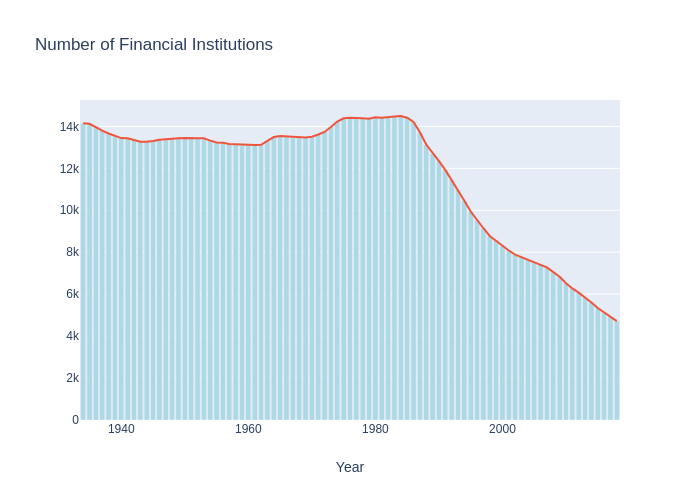
The above image depicts the number of financial institutions (FI’s) doing business in the United States throughout this period. The trend appears to be relatively steady until 1984 where we see a rapid overall decline of the total number of FI’s operating in the country to just 4,717 as of 2018 from a high of 14,496 institutions in 1984.
Growth of Deposits Over Time
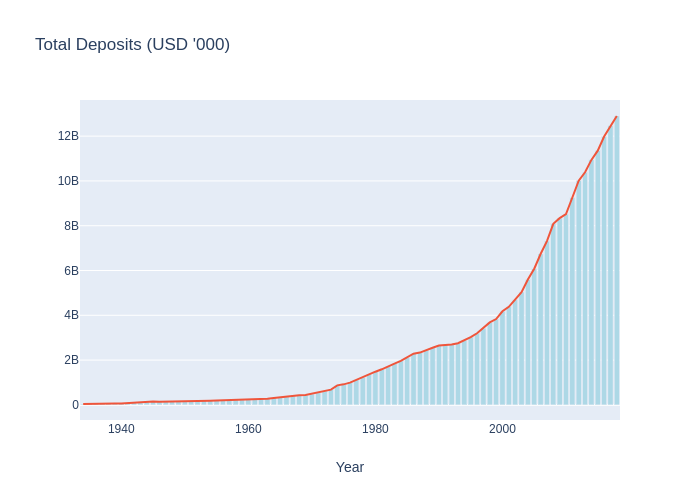
We can see that the growth of the total deposit base over the years including foreign deposits held by American FI’s has been steady. It is important to note that the data shows only the dollar values of the deposits as reported and does not take into account the growth of the size economy.
Who Holds These Deposits?
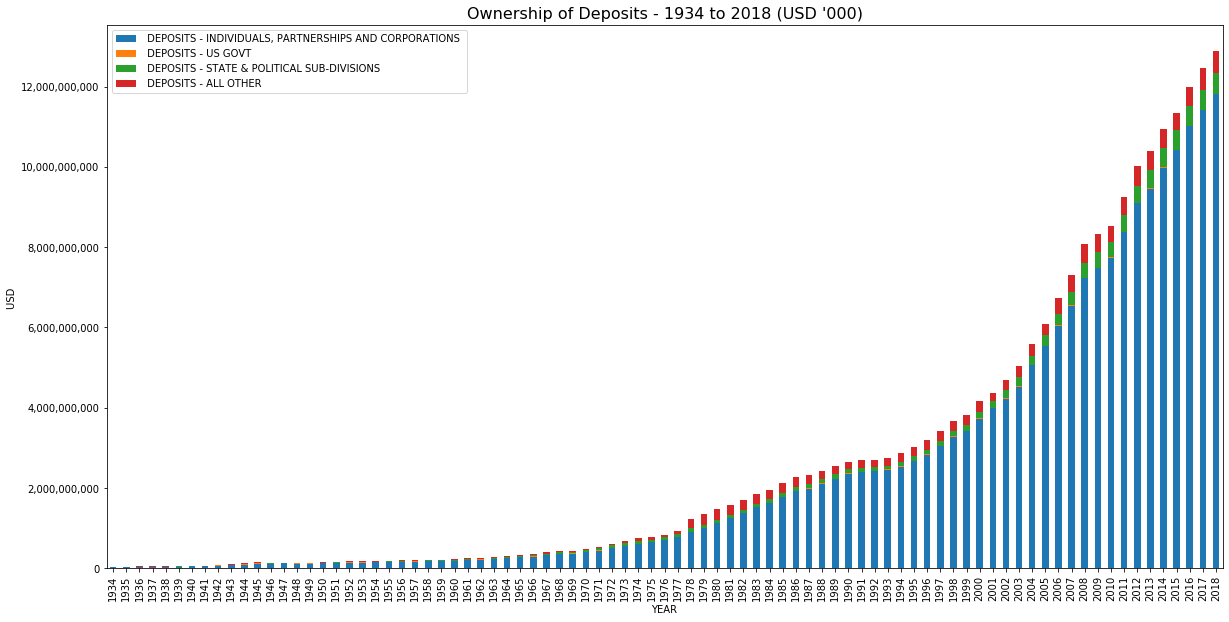
The bulk of deposits appear to be owned by private individuals and corporations with the rest held by the Federal Government along with State and other political subdivisions.

On average the American public has held around 89% of the deposit base while the remaining 11% was held by Federal, State and Local government entities.
What Are Domestic Deposits Composed Of?
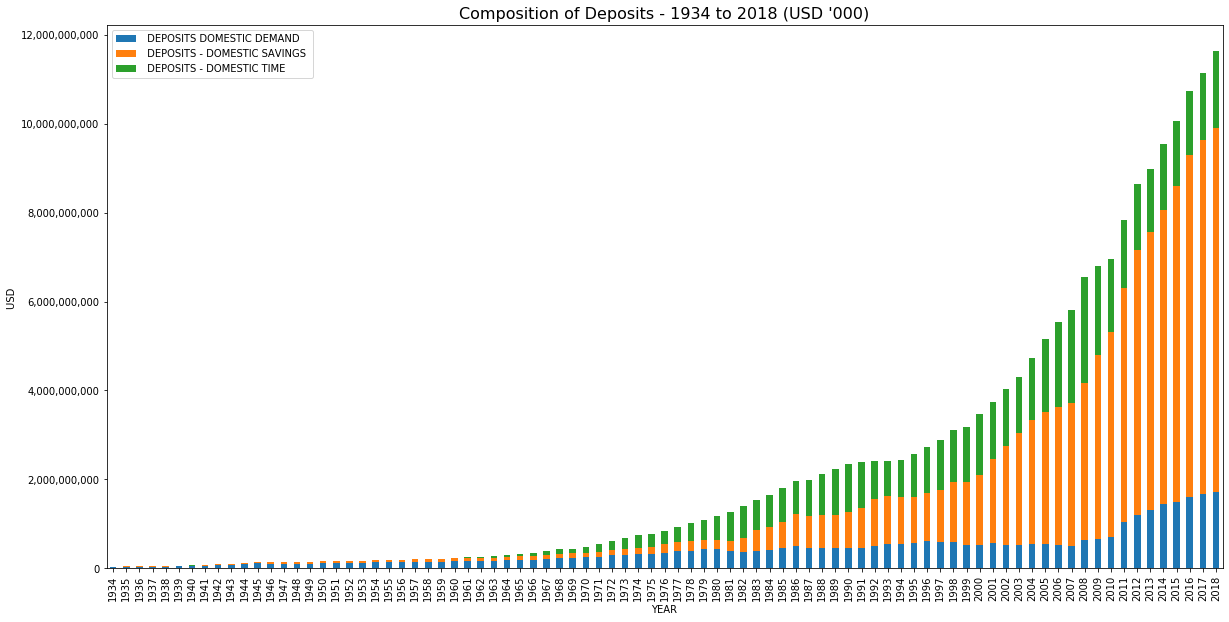
We can see from the above image the composition of domestic deposits held by the public over the period. What is surprising is that contrary to popular belief, Americans hold more and more of their money in the form of savings accounts and time deposits over the years which implies a lot of savings!
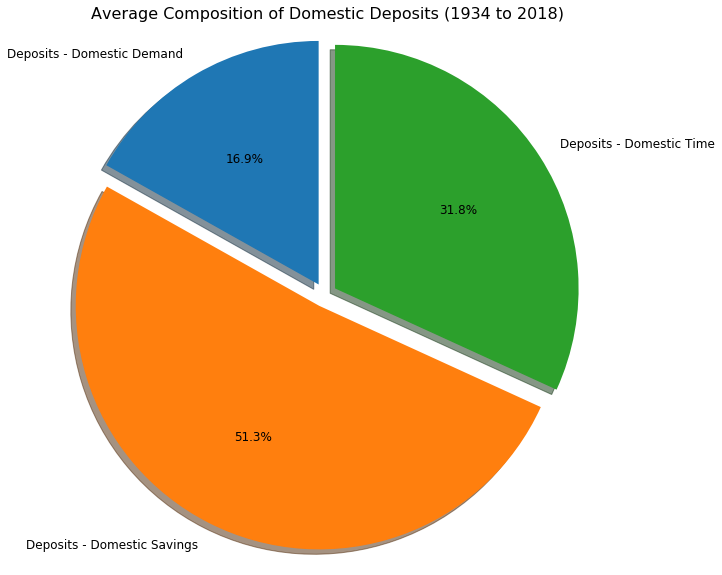
On average around 83% of deposits were held in the form of savings and time deposit accounts with the rest being held in demand (checking) accounts.
Summary
The deposit base of the United States has grown steadily over time but the number of financial institutions operating in the country has decreased to all time lows. Through booms and busts in the economic cycle, money has continued to circulate and generate more wealth enabling people to buy homes, start businesses and make capital investments to enhance standards of living.